A reliable livestock wastewater treatment project is not created by choosing one reactor and sizing it from animal headcount. Pig farms, poultry farms and dairies generate different combinations of manure, urine, wash water, bedding, feed losses, disinfectants, nutrients, grit and stormwater. The treatment train must therefore be designed around measured flow, pollutant mass, operating cycles, discharge requirements and the destination of recovered water, sludge, digestate and biogas.
This guide is written for farm owners, engineering consultants, EPC procurement teams and environmental managers who need a practical route from wastewater characterization to commissioning. It explains the full wastewater treatment process, including source separation, screening, solid-liquid separation, equalization, anaerobic conversion, activated sludge, nitrogen removal, polishing, water reuse, odor control and sludge dewatering.
The guide addresses common project questions raised by buyers: how a pig farm wastewater treatment project differs from poultry or dairy wastewater, when anaerobic treatment is justified, how nitrogen removal should be designed, which equipment belongs in the EPC scope and how performance should be verified before handover.
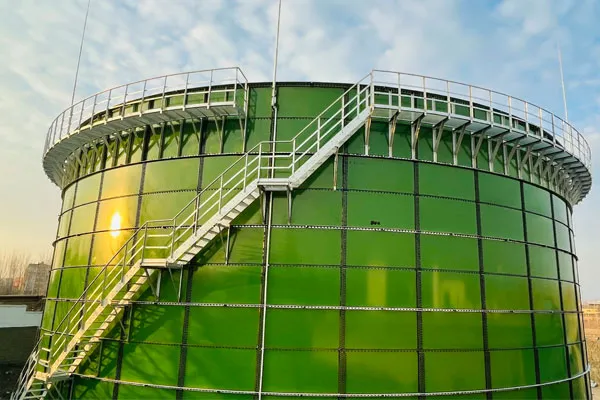
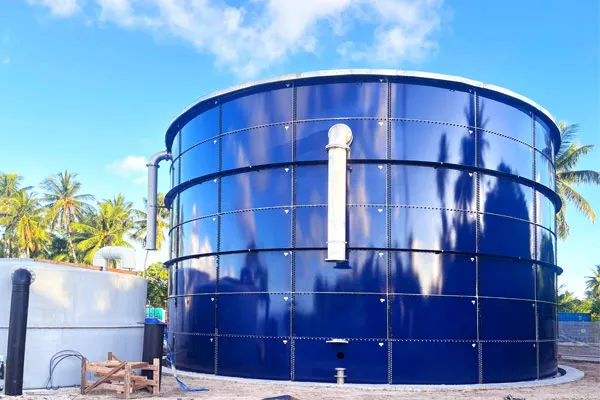
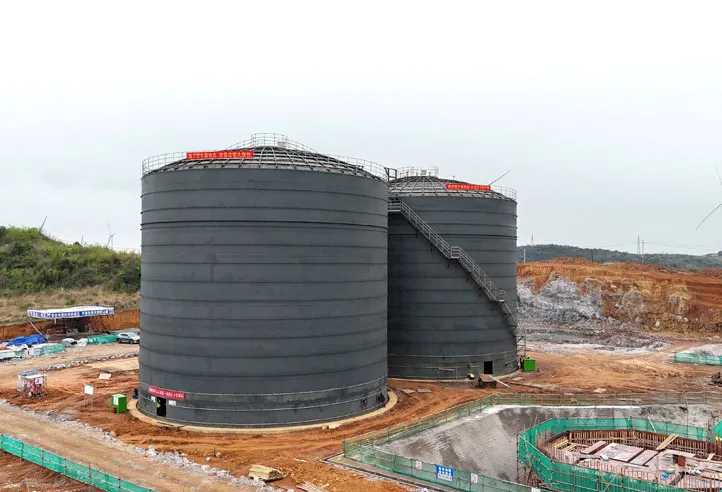
Yikang project information illustrates why the design basis matters. One published pig-farm project treats 750 m³/d and combines anaerobic treatment with a two-stage anoxic/oxic system and final denitrification. A published dairy project treats 650 m³/d wastewater with influent COD reported as high as 50,000 mg/L. These examples should not be copied as universal designs; they show how different farm loads require different process combinations and performance controls.
What Is a Livestock Wastewater Treatment Process?
A livestock wastewater treatment process is the coordinated sequence of source controls, physical separation, biological conversion, polishing, residuals management and monitoring used to treat liquid and solid waste from animal farming.
The word “system” matters. A separator, digester, aeration tank or membrane unit cannot solve the complete problem by itself. The project must control what enters the collection network, absorb hydraulic and pollution-load variation, remove coarse material, convert biodegradable organics, manage nitrogen and phosphorus, separate biomass, handle residual solids and deliver water that meets the agreed discharge or reuse objective.
A reliable design also includes non-process elements: channels and sumps, emergency storage, pumps, standby capacity, ventilation, odor collection, electrical distribution, instrumentation, chemical storage, access for cleaning, operator safety, laboratory testing and a plan for abnormal conditions. These items can determine whether a theoretically sound process actually performs on a working farm.
Yikang Ecological presents its livestock waste management offering as a full-chain approach that combines liquid treatment, anaerobic energy recovery and controlled aerobic composting of solids. That integrated framing is useful, but the exact process still has to be selected from site-specific data.
Why Livestock Wastewater Treatment Requires Site-Specific Design
Livestock wastewater is difficult because its flow, solids, organic load, nitrogen, salinity, pathogens and cleaning chemicals can change sharply by animal type, housing system, season and farm operation.
Average daily flow is rarely enough for design. Washdown can create short hydraulic peaks. Drinking-water leaks can dilute the stream while increasing pumping and tank volume. Rainwater entering open yards may create a large seasonal load. Production cycles can change animal numbers, feed and manure generation. A dairy’s milking schedule creates repeatable peaks, whereas a pig farm may have continuous manure flow plus periodic house cleaning.
Solids are equally variable. Fibers, feed, hair, feathers, bedding, grit and sand can block pumps, settle in tanks, abrade equipment or consume reactor volume. Fine suspended solids may pass through a coarse screen and later reduce oxygen-transfer efficiency or increase sludge production. If these materials are not characterized, the process can fail even when the laboratory COD result appears manageable.
Nitrogen is a frequent limiting factor. Organic nitrogen can be converted to ammonia, and biological nitrogen removal requires the right sequence of aerobic and anoxic conditions, enough biodegradable carbon, sufficient sludge age, alkalinity, dissolved oxygen control and stable temperature. High ammonia can inhibit biological systems, while excessive aeration can waste energy and reduce denitrification potential.
Cleaning and veterinary practices also matter. Disinfectants, antibiotics, salts, acids, alkalis and detergent slugs may inhibit microorganisms. The design team should identify the chemical name, concentration, use frequency and discharge route. Where possible, concentrated chemicals should be collected or metered separately instead of being dumped into the biological system.
Data Required Before Designing a Livestock Wastewater Treatment System
Design data should describe wastewater quantity, quality, variability, farm operation, environmental targets, climate, site constraints and the required destination for water, solids and gas.
Begin with animal inventory by type, age and production stage. Record housing, manure-removal method, bedding, washdown practice, drinking-water system, milking or processing activity, feed storage, yard drainage and the separation between clean stormwater and contaminated runoff. A single “number of animals” is not a complete design basis.
Flow monitoring should cover normal days, cleaning days and wet-weather conditions. Use measured pump run time, calibrated channels, tank level change or flow meters where practical. At minimum, distinguish average daily flow, maximum day, peak hour and batch discharges. Record planned expansion because hydraulic infrastructure is expensive to resize later.
Sampling must reflect variability. One grab sample can misrepresent the plant by an order of magnitude. A sampling plan may include composite samples across operating periods plus separate characterization of high-strength streams. Important parameters commonly include pH, temperature, total suspended solids, volatile suspended solids, COD, BOD, ammonia nitrogen, total nitrogen, total phosphorus, alkalinity, conductivity, oil and grease, chloride and relevant pathogens. Local discharge permits or reuse plans may require additional parameters.
| Design input | What to provide | Why it changes the process |
|---|
| Animal and production data | Species, headcount, weight/age, housing, production cycle | Changes manure quantity, composition and variability |
| Hydraulic profile | Average, maximum day, peak hour, cleaning batches, rainfall intrusion | Determines collection, equalization, pumps and reactor hydraulics |
| Wastewater analysis | COD/BOD, TSS/VSS, NH3-N, TN, TP, pH, alkalinity, salinity, temperature | Determines pretreatment, biological loading and nutrient removal |
| Solids and grit | Fiber, bedding, sand, particle distribution, settleability | Determines screening, separation, abrasion control and sludge route |
| Cleaning chemicals | Product, dose, frequency, discharge timing | Identifies inhibition, pH shock and segregated collection needs |
| Effluent objective | Discharge limit, sewer acceptance, irrigation, washing or process reuse | Determines polishing, disinfection, storage and monitoring |
| Site conditions | Land, elevation, soil, groundwater, climate, power, access, neighbors | Changes civil design, odor control, equipment selection and resilience |
The project team should agree which data are measured, estimated or provisional. Estimates can support concept design, but critical equipment and guaranteed performance should not be finalized until representative measurements are available.
How the Wastewater Treatment Process Changes by Farm Type
The wastewater treatment process changes by farm type because animal housing, manure collection, water use, feed, bedding and cleaning practices determine hydraulic load, solids content and nutrient composition.
| Facility type | Typical design concern | Common front-end priority | Biological treatment implication |
|---|
| Pig farm | High ammonia, variable manure dilution, periodic house cleaning and odor | Equalization, coarse solids removal and controlled manure collection | Anaerobic conversion may reduce organic load; robust nitrification and denitrification are usually critical |
| Poultry farm | Litter, feathers, fine solids, batch washdown and strong seasonal variation | Dry collection where possible, screening and separation of litter from wash water | Smaller but sharper hydraulic events may require storage and batch equalization |
| Dairy farm | Milking-parlor water, manure, bedding, sand, milk losses and detergents | Sand and grit control, solids separation and segregation of concentrated product losses | Readily biodegradable organics can support biological treatment, while detergents and salinity require monitoring |
| Slaughterhouse | Blood, fats, proteins, suspended solids and sanitation chemicals | Blood recovery, screening, fat separation and dissolved-air flotation where appropriate | High organic strength can favor anaerobic pretreatment, followed by aerobic polishing and nutrient removal |
A poultry waste management plan should not be copied from a dairy design, and a slaughterhouse wastewater treatment train should not be sized as if it were diluted farm wash water. The engineering team should first divide all streams into clean water, reusable water, high-strength recoverable material, biological-treatment feed and materials that require separate handling.
This comparison also explains why generic requests for a “complete plant” often produce unreliable quotations. Two suppliers can offer different prices because they are solving different assumed loads. A technically comparable bid requires one agreed influent data set, one effluent target, one operating schedule and a common scope boundary.
Source Control and Clean-Water Separation
Source control prevents avoidable water and contaminants from entering the treatment system, reducing the volume and load that downstream equipment must handle.
Fix leaking drinkers and valves. Sweep or scrape solids before washdown where animal welfare and operating procedures allow. Separate roof drainage and clean stormwater from manure channels. Use controlled-pressure cleaning rather than unrestricted hoses. Keep concentrated disinfectant, milk, feed or chemical losses out of the biological plant when a safer recovery or disposal route exists.
These measures often provide a better return than increasing tank volume after the fact. Every cubic metre of unnecessary clean water must be pumped, mixed and potentially aerated. Dilution may lower concentration but does not remove total pollution mass. It can also reduce the economics of anaerobic digestion by decreasing feedstock strength and increasing heat demand.
Source control needs ownership. Assign responsibilities for water-meter review, leak response, channel cleaning, chemical discharge and stormwater inspections. Include these controls in operator training and in the performance guarantee boundary, because the treatment plant cannot compensate indefinitely for uncontrolled upstream changes.
Preliminary Treatment and Solid-Liquid Separation
Preliminary treatment removes coarse, settleable, abrasive or fibrous material before it damages pumps, occupies reactor volume or increases downstream sludge production.
The sequence can include bar screens, rotary screens, screw presses, grit chambers, settling, dissolved air flotation or other separation methods. Selection depends on particle size, fiber content, sand, grease, desired solids dryness, downstream process and how the separated material will be used.
For manure streams, solid-liquid separation can reduce organic and solids loading, but it does not mean the liquid is “clean.” EPA notes that after separation, the remaining manure liquid may still contain about half of the original nutrients. Designers must therefore measure the separated liquid rather than assuming a fixed removal percentage.
Separated solids require a real destination. Options can include composting, bedding recovery, anaerobic co-digestion, authorized land application or further dewatering. Storage must control runoff and odor. The business case should include polymer, power, wash water, labor, transportation and seasonal demand for the recovered product.
Waste activated sludge and chemically conditioned sludge generated later in the process can be handled through belt press wastewater treatment when the sludge characteristics and required capacity suit continuous belt dewatering. Equipment selection should be based on representative sludge testing, not only nominal tonnes per hour.
Equalization and Load Management
Equalization stores and mixes variable wastewater so downstream treatment receives a controlled flow and more stable pollutant load.
An equalization tank is not merely spare volume. It should be sized from the measured hydraulic profile and the operating schedule of downstream equipment. Mixing must prevent settling and septic zones without introducing unnecessary air. Level control should coordinate transfer pumps, high-level alarms, emergency storage and bypass prevention.
Where strong batches occur, operators can release them gradually. Online pH, conductivity, ammonia or oxidation-reduction potential may help identify abnormal inputs, but sensors need cleaning and calibration. A practical plant also includes sample points that let operators compare collection, equalization and biological influent.
Emergency storage should be separated conceptually from normal equalization. If one tank is always full because it is used for routine balancing, it cannot contain a major cleaning discharge or process upset. The owner should define how many hours or days of contingency are required and where the stored wastewater will go after the event.
Anaerobic Digestion in the Livestock Wastewater Treatment Process
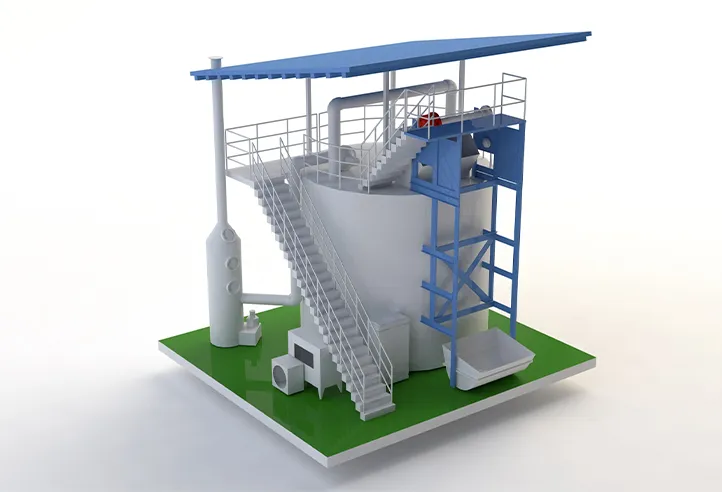
Anaerobic treatment uses microorganisms without oxygen to convert biodegradable organic matter into biogas, stabilized material and new biomass.
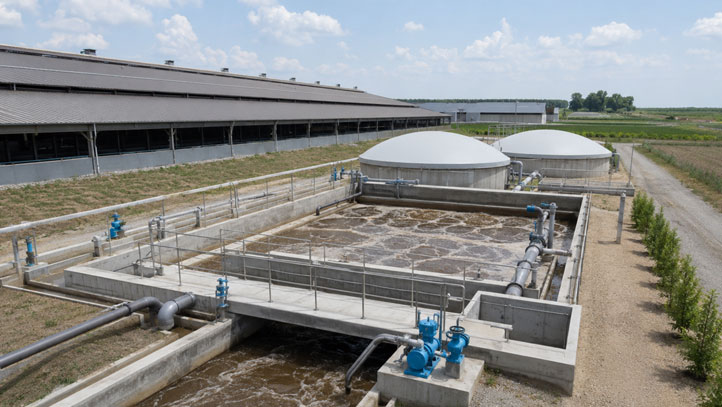
Anaerobic digestion can be attractive for high-strength manure and organic wastewater because it reduces organic load while recovering methane-rich gas. It is not a substitute for all downstream treatment. Digestate liquid can still contain ammonia, phosphorus, suspended solids, dissolved COD, pathogens and odor compounds. If the project requires discharge or high-quality reuse, aerobic nitrogen removal and polishing are often still needed.
Feedstock concentration, temperature, biodegradability, inhibitors, mixing, hydraulic retention time, solids retention, loading rate and pH stability influence digester performance. EPA’s operator guide explains that solids retention time is critical for maintaining slower-growing methanogens. The same guide states that agricultural biogas systems commonly produce gas containing roughly 45%–70% methane, with carbon dioxide and smaller quantities of hydrogen sulfide, ammonia, volatile compounds and water vapor.
Gas handling must be engineered as a safety system. Methane is combustible in air at approximately 5%–15%, and hydrogen sulfide is toxic. Gas-tight equipment, pressure/vacuum protection, flame arresting where required, detection, ventilation, classified electrical equipment, condensate management, emergency procedures and trained operators are essential.
Yikang Ecological states that it has delivered more than 60 MW-scale biomass energy projects in China. A prospective buyer should ask which references match its feedstock, climate, capacity and intended gas use, and should request a defined scope for pretreatment, digestion, gas purification, energy conversion, digestate treatment, automation and commissioning.
Aerobic Biological Treatment and Carbon Removal
Aerobic treatment supplies oxygen to microorganisms that oxidize biodegradable pollutants and, under suitable conditions, convert ammonia through nitrification.
Common configurations include activated sludge, sequencing batch reactors, oxidation ditches, membrane bioreactors and biofilm processes. No process name guarantees performance. Design must consider organic loading, ammonia, temperature, sludge age, oxygen transfer, mixing, settleability, footprint, operator capability and the required effluent.
Aeration can be one of the largest electricity users in a biological plant. Blower selection therefore needs actual airflow, pressure, turndown, inlet conditions, diffuser fouling allowance and control philosophy. An efficient machine operated far from its design point can waste energy. Dissolved-oxygen control, ammonia-based aeration control and coordinated blower staging can reduce unnecessary air while maintaining treatment.
Yikang’s air-suspension blower page reports a company-claimed energy reduction of approximately 30%–50% compared with traditional blowers. Such a range should not be copied into a project financial model without a baseline. Buyers should compare wire-to-air efficiency across the expected operating map, including inlet temperature, elevation, discharge pressure, turndown and auxiliary consumption.
Biomass separation is equally important. Poor settling can cause solids loss and effluent failure even if biochemical conversion is adequate. The design should address selector zones, filament control, return sludge, waste sludge, clarifier loading, membrane flux or other separation mechanisms appropriate to the chosen process.
Nitrogen Removal in a Livestock Wastewater Treatment System
Biological nitrogen removal converts ammonia to nitrate under aerobic conditions and then converts nitrate to nitrogen gas under anoxic conditions.
Nitrification requires sufficient sludge age, oxygen, alkalinity and suitable temperature. Approximately speaking, nitrification consumes alkalinity and can lower pH; therefore alkalinity measurement and control are important. High free ammonia, free nitrous acid, salinity, disinfectants or low temperature can inhibit the process.
Denitrification requires nitrate, anoxic conditions and an available electron donor, often biodegradable carbon. A stream with very high nitrogen but insufficient readily biodegradable carbon may need internal carbon management, staged feeding, fermentation-derived carbon or an external carbon source. Adding chemicals without a mass balance can raise cost and residual COD.
Process options include pre-anoxic, post-anoxic, multi-stage anoxic/aerobic systems, intermittent aeration and specialized shortcut nitrogen pathways. Advanced options can reduce oxygen or carbon demand but may require tighter control and experienced operation. The best design is the one that matches wastewater characteristics and local operator capacity, not necessarily the most novel configuration.
Monitor more than final ammonia. Useful process indicators can include influent and effluent nitrogen species, dissolved oxygen, pH, alkalinity, oxidation-reduction potential, sludge age, mixed-liquor solids, settleability and temperature. Trend data over time so operators can detect loss of nitrification before the final effluent exceeds its limit.
Phosphorus, Solids and Advanced Polishing
Advanced polishing removes residual suspended solids, nutrients, pathogens, color or dissolved contaminants after the main biological process.
Phosphorus can be removed biologically, chemically or through a combination. Chemical precipitation with iron, aluminum or lime can be reliable but produces additional sludge and changes pH. Biological phosphorus removal can reduce chemical use but depends on carbon availability and process stability. The project should define the required total phosphorus limit and the disposal or reuse route for phosphorus-rich solids.
Clarification, filtration, membranes, coagulation, adsorption, oxidation and disinfection may be used depending on the effluent goal. The technology should be selected against the actual residual pollutant profile. For example, a membrane can retain suspended material but does not automatically remove dissolved salts or all dissolved nitrogen.
Disinfection design depends on target organisms, turbidity, UV transmittance, disinfectant demand, contact time and the reuse or discharge context. A low-turbidity stream can be easier to disinfect. Storage after disinfection must avoid recontamination, mosquito breeding and unintended cross-connections.
Reclaimed Water Reuse and Nutrient Recovery
Reclaimed-water reuse applies treated wastewater to a controlled beneficial use under water-quality, health, agronomic and environmental requirements.
Potential farm uses may include irrigation, yard washing, equipment cleaning, dust control or odor-control systems, subject to local law and risk assessment. Water suitable for one use may not be suitable for another. Irrigation assessment should consider salinity, sodium, nutrients, pathogens, crop sensitivity, soil drainage, groundwater, seasonal demand and the ability to stop reuse during wet periods.
Nutrients in reclaimed water can have fertilizer value, but excess application can cause runoff, leaching or crop damage. Develop a nutrient management plan based on crop demand, soil testing and total water volume. Storage may be needed when wastewater production and irrigation demand do not match.
Separate reclaimed-water piping from potable water. Use clear marking, backflow prevention, restricted access and operating procedures. Include monitoring locations and action limits. The treatment plant should have a compliant alternative destination when reuse is unavailable.
Odor Control, Sludge and Residuals Management
Residuals management controls the solids, scum, screenings, grit, waste biomass, odors and concentrated reject streams created by wastewater treatment.
Odor control begins with prevention: short retention in open channels, regular cleaning, covered storage, controlled pH and avoiding uncontrolled anaerobic zones. Where emissions cannot be prevented, capture them close to the source and treat the correct air volume. Oversized ventilation can increase equipment cost, whereas insufficient capture allows odor to escape.
Screenings and grit need sealed collection and regular removal. Waste biological sludge requires thickening, stabilization, dewatering and a legal destination. Polymer selection should be validated by jar or pilot tests. Dewatering performance should be specified as a range under defined feed conditions rather than a guaranteed cake percentage for every sludge.
Reject water from dewatering can carry high ammonia and soluble COD back to the headworks. Include it in the plant mass balance. If the project recycles every side stream without accounting for it, the biological plant can be overloaded even when external influent remains unchanged.
Automation, Monitoring and Operator Requirements
Automation coordinates equipment and records process conditions, while trained operators interpret the data, maintain equipment and respond to biological changes.
A practical control system should manage tank levels, pump duty/standby, flow pacing, blower control, chemical dosing, sludge wasting, alarms and emergency shutdowns. Remote monitoring can support troubleshooting, but it does not replace onsite inspection, cleaning, calibration and sampling.
Define which instruments are critical and how they will be maintained. Flow, level, pH, dissolved oxygen and pressure are common, while ammonia, nitrate, turbidity and conductivity may be justified for tighter control. Each sensor needs an access point, calibration procedure, spare strategy and response plan when the signal is invalid.
Operator documentation should include a process description, control narrative, alarm matrix, standard operating procedures, preventive maintenance, laboratory methods, troubleshooting trees, safety procedures and record forms. Training should use the actual installed system and should include abnormal scenarios rather than only normal startup.
What Yikang Project Data Show About Livestock Wastewater Design
Project data provide useful engineering benchmarks when they are treated as evidence of process capability rather than as guarantees for a different site.
Yikang publishes a Qidong pig-farm project with a treatment capacity of 750 m³/d. The reported process combines anaerobic treatment, two-stage anoxic/oxic biological treatment, final denitrification and carbon dosing, with total nitrogen controlled below 40 mg/L. The significance is not the number alone: the process includes multiple nitrogen-control stages because anaerobic COD removal does not by itself remove all ammonia and total nitrogen.
Yikang also publishes a dairy-farm project treating 650 m³/d with influent COD reported up to 50,000 mg/L and COD removal above 99.86%. A high percentage should always be interpreted together with influent concentration, final effluent concentration, sampling period and operating conditions. For procurement, ask the EPC contractor to provide both percentage removal and absolute outlet values.
Use reference projects to ask better questions: Was the wastewater composition similar? Did the plant operate through seasonal temperature changes? Which parameters were guaranteed? How much chemical carbon was required? What was the actual sludge production? How often did operators clean screens, tanks and membranes? A reference becomes valuable when the answer can be transferred into design risk controls.
How to Compare a Livestock Wastewater Treatment Project EPC Contractor
Supplier comparison should evaluate design basis, process responsibility, evidence, equipment integration, commissioning, guarantees, lifecycle support and exclusions—not only capital price.
| Evaluation area | Strong supplier evidence | Warning sign |
|---|
| Design basis | Measured flow/load, assumptions, mass balance and peak factors | Proposal based only on animal headcount |
| Process selection | Explains why each stage is included and what it removes | Generic flow diagram copied across farms |
| Performance | Defines influent envelope, effluent values, test period and exclusions | “Meets all standards” without a named standard |
| Equipment | Duty point, redundancy, materials, instruments and energy data | Model list without operating conditions |
| Projects | Comparable feedstock, climate, scale, operating history and contactable evidence | Photos with no scope or result |
| Delivery | Clear engineering, supply, civil, installation, commissioning and training boundaries | Turnkey claim with major exclusions hidden |
| O&M | Chemicals, power, sludge, labor, spares and maintenance forecast | Only capital price is discussed |
| Support | Response process, remote diagnostics, spares and upgrade path | No post-commissioning responsibility |
Yikang Ecological states that its wider organization includes a manufacturing base of more than 100,000 square metres, over 1,000 professionals and projects in more than 60 countries. These are useful prequalification signals, but buyers should still verify which legal entity, factory, team and reference projects apply to the offered scope.
Ask the supplier to connect the proposed wastewater treatment project to actual farm data. A credible proposal should show the calculation chain from load to tank volume, oxygen, sludge, chemicals, energy and residuals.
Factory Acceptance, Commissioning and Performance Testing
Acceptance testing verifies that equipment, controls, documentation and the complete process meet the agreed scope under defined conditions.
Factory acceptance testing can verify dimensions, materials, coating records, motors, instruments, panels, software logic, alarms, interlocks, dry runs and documentation. It cannot prove biological effluent performance without representative wastewater and sufficient acclimation time. The contract should distinguish equipment FAT, site commissioning and process performance testing.
Commissioning should include mechanical completion, flushing, leak tests, calibration, rotation checks, safety devices, clean-water testing, inoculation where relevant, controlled loading and operator training. A biological plant may need weeks or months to reach stable performance, depending on temperature, inoculum, loading and process.
Define the performance test duration, sampling frequency, laboratory, influent envelope, excluded abnormal events and how missing data are handled. Use composite sampling when appropriate. Evaluate not only effluent quality but also capacity, energy, chemicals, sludge production, odor, noise and operator workload.
RFQ Checklist for a Livestock Wastewater Treatment System
A complete request for quotation gives suppliers enough verified information to select a process, define scope and compare offers on the same technical basis.
Farm location, climate, elevation and applicable discharge or reuse regulation
Animal species, current and future headcount, housing and production cycle
Manure collection, bedding, washdown, drinking-water and stormwater arrangement
Measured average, maximum and peak wastewater flow
Representative laboratory results with dates and sampling method
High-strength batches, disinfectants, detergents, salinity and temperature
Existing ponds, tanks, equipment, utilities and available land
Required effluent destination and seasonal reuse demand
Solid residual routes, fertilizer plan and odor-sensitive neighbors
Desired automation, redundancy, remote monitoring and staffing
Engineering, civil, supply, installation, commissioning and training scope
Required project schedule, documentation language and commercial terms
Request a process flow diagram, mass balance, equipment list, electrical load, chemical estimate, sludge estimate, operating cost assumptions, civil input, control philosophy, guarantee schedule and exclusion list. These documents make bids comparable and reduce change orders.
Frequently Asked Questions About the Livestock Wastewater Treatment Process
These frequently asked questions address the design and purchasing issues most likely to affect livestock wastewater system performance.
What is the best process for livestock wastewater treatment?
There is no universal best process. The correct train depends on flow, solids, COD, ammonia, salinity, temperature, discharge or reuse target, land, energy recovery and operator capability. Representative sampling and a mass balance should come before equipment selection.
Does anaerobic digestion produce discharge-ready water?
Usually not by itself. Digestion can remove substantial biodegradable organic matter and recover biogas, but digestate may still contain ammonia, phosphorus, suspended solids, pathogens and residual COD. Aerobic nitrogen removal, separation, polishing or disinfection may still be required.
How large should an equalization tank be?
Size it from the measured hourly flow profile, batch discharges, downstream operating schedule and required contingency. A simple percentage of daily flow can be misleading when cleaning creates short, intense peaks.
Can treated livestock wastewater be reused for irrigation?
Potentially, where local rules allow and water quality, pathogens, salinity, nutrients, soil, crops, groundwater and seasonal demand are controlled. A reuse plan needs storage, monitoring, application limits and an alternative destination.
What information is needed for a reliable quotation?
Provide animal and housing data, measured flow, representative laboratory analysis, cleaning chemicals, site conditions, target effluent, residuals route, utilities, required scope and schedule. The more verified the inputs, the more comparable the proposals.
How should operating cost be compared?
Compare power, chemicals, sludge transport, replacement parts, labor, laboratory testing, water, gas use, downtime and expected maintenance at the same influent and effluent conditions. Do not compare a low-load estimate with a peak-load guarantee.
Conclusion: Build the Livestock Wastewater Treatment Process Around Verified Farm Data
A successful livestock wastewater project connects measured farm inputs to a controllable process, verified equipment, safe residuals management and a realistic operating organization.
The fastest route to a reliable plant is not choosing a fashionable technology. It is defining the wastewater, preventing avoidable load, separating difficult solids, stabilizing flow, selecting anaerobic and aerobic stages for the actual objectives, controlling nitrogen, planning sludge and odor, and verifying the complete system through commissioning and performance testing.
Yikang Ecological can use its solution, equipment, manufacturing and project experience to develop a site-specific concept. A buyer should begin by sharing flow records, laboratory data, animal and cleaning operations, effluent requirements, residual destinations and project boundaries. That evidence allows both parties to move from a generic treatment diagram to a defensible engineering and commercial proposal.
External References
The following sources provide independent background on global wastewater, animal manure resources and agricultural wastewater management.
 English