The global wastewater treatment sector is changing rapidly. Stricter environmental regulations, rising operating costs, and growing pressure to reduce carbon emissions are pushing farms, food processors, and industrial facilities to move beyond traditional end-of-pipe treatment.
Today, wastewater is no longer viewed only as a stream that must be treated before discharge. In many agricultural and industrial projects, it is increasingly seen as a source of renewable energy, reusable water, and valuable nutrients.
For Yikang Ecological, this shift represents a new direction in environmental engineering: integrated treatment systems that combine pollution control, resource recovery, and long-term operational efficiency.
Decentralized Treatment for Real Project Conditions
Traditional wastewater infrastructure often depends on large centralized treatment plants and extensive pipeline networks. While this model remains important in urban areas, it may not always be suitable for livestock farms, food processing facilities, rural communities, or scattered agricultural production zones.
In these scenarios, decentralized and on-site treatment systems can offer a more practical solution. By treating wastewater and organic waste closer to the source, operators can reduce transportation costs, improve response efficiency, and design systems around the actual characteristics of each project.
For agricultural and livestock operations, this flexibility is especially important. Wastewater volume, pollutant concentration, manure composition, land availability, and discharge requirements can vary significantly from site to site. A project-specific treatment system is often more effective than a one-size-fits-all model.
Yikang Ecological supports this approach through integrated solutions for livestock wastewater treatment, manure recycling, biogas engineering, and environmental equipment manufacturing.
Biological Treatment and Resource Recovery
Another important trend is the shift toward biological and physical treatment processes with reduced chemical dependency.
In many traditional systems, large amounts of chemical coagulants, disinfectants, or synthetic additives may be required to meet treatment targets. While chemicals still play an important role in certain processes, excessive chemical use can increase operating costs, generate additional sludge, and complicate downstream resource recovery.
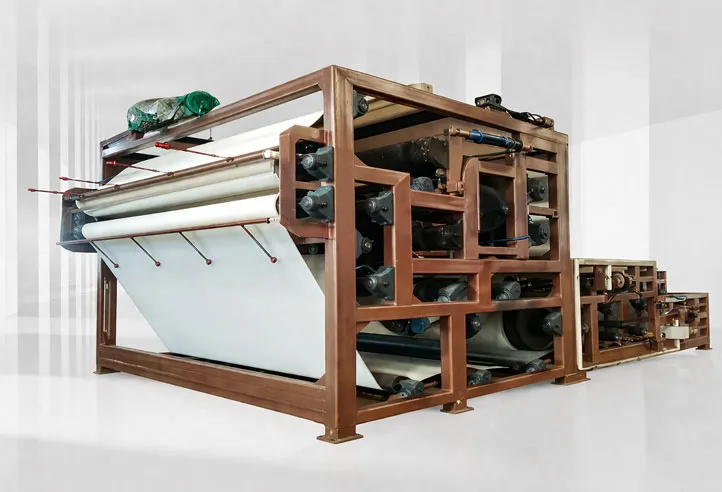
Modern wastewater treatment is increasingly focused on improving biological efficiency. Processes such as anaerobic digestion, hydrolysis, A/O treatment, simultaneous nitrification and denitrification, and advanced solid-liquid separation can help remove organic matter, nitrogen, suspended solids, and other pollutants more efficiently.
For agricultural wastewater, this is particularly valuable. With proper treatment, stabilization, and compliance with local standards, organic residues and digestate may be further processed for agricultural reuse, supporting a more circular relationship between livestock farming and crop production.
From Wastewater to Renewable Value
The future of wastewater treatment is not only about compliance. It is also about value creation.
High-strength organic wastewater from livestock farms, food processing plants, and agricultural production sites often contains significant organic matter. Through anaerobic digestion, part of this organic load can be converted into biogas, which may be used for power generation, heating, or further upgrading, depending on project scale and local conditions.
At the same time, treated water may be reused for irrigation, cleaning, or other non-potable purposes where permitted by local regulations. Solid and liquid by-products may also be managed as nutrient resources after proper stabilization and treatment.
| Treatment Focus | Conventional Approach | Integrated Resource Recovery Approach |
|---|
| Primary Goal | Compliance and discharge | Pollution control with resource recovery |
| Energy Use | Often relies on external energy input | May recover energy through biogas production |
| Water Management | Treated mainly for discharge | Potential reuse where permitted |
| Sludge / Digestate Handling | Disposal or further treatment required | Can be stabilized and managed as nutrient resources |
| System Design | Centralized or single-purpose treatment | Flexible, decentralized, and project-specific design |
The Role of GFS Tanks
Reliable storage and reactor infrastructure is essential for both industrial and agricultural wastewater treatment. In many projects, tanks are required for wastewater collection, anaerobic digestion, equalization, sludge storage, digestate storage, and other process stages.
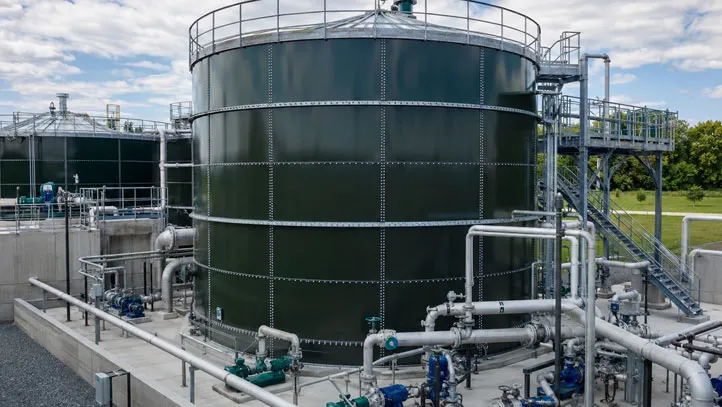
Glass-Fused-to-Steel, or GFS, tanks provide a modular option for these applications. They combine the strength of steel with the corrosion resistance of glass enamel coating, making them suitable for demanding wastewater and biogas engineering environments.
Compared with traditional concrete structures, GFS tanks can offer advantages such as modular transportation, faster on-site assembly, flexible capacity design, and easier future expansion. These features make them especially useful for decentralized treatment projects and agricultural sites where construction time, site conditions, and long-term durability are key considerations.
Building More Sustainable Treatment Systems
Industrial and agricultural wastewater treatment is moving toward a more integrated future. Instead of focusing only on pollutant removal, modern systems must consider energy recovery, nutrient management, water reuse, operational cost control, and long-term environmental value.
By combining wastewater treatment, anaerobic digestion, manure recycling, odor control, and environmental equipment manufacturing, Yikang Ecological helps agricultural and industrial clients develop solutions that are better aligned with both compliance requirements and sustainability goals.
For livestock farms, food processors, and agricultural production bases, the future of wastewater treatment is not simply about discharge. It is about turning environmental responsibility into circular value.
Frequently Asked Questions
Why is wastewater treatment moving toward decentralized systems?
Decentralized systems allow wastewater and organic waste to be treated closer to the source. This can reduce transportation costs, improve project flexibility, and make treatment systems more suitable for farms, rural areas, and scattered production sites.
How does anaerobic digestion support resource recovery?
Anaerobic digestion converts organic matter into biogas under oxygen-free conditions. Depending on the project, biogas can be used for heating, electricity generation, or further purification.
What role do GFS tanks play in wastewater treatment projects?
GFS tanks can be used for wastewater storage, anaerobic digestion, sludge storage, digestate storage, and other environmental engineering applications. Their modular structure, corrosion resistance, and flexible installation make them suitable for both industrial and agricultural projects.
 English